

 English
-
 繁體中文
繁體中文 -
中文
-
English


China's Auto Exports Surge 68.7% in May: A Defining Globalization Battle for Chinese Automakers
Author:Shanghai Sieton Group Co.,Ltd.,
Click:
Time:2026-06-18 14:30:00
On June 10, the China Association of Automobile Manufacturers (CAAM) released its latest data, showing that China's automobile exports reached 930,000 units in May, up 68.7% year-on-year, marking the second consecutive month with exports exceeding 900,000 units.
Among them, new energy vehicle (NEV) exports totaled 446,000 units, representing a remarkable 110% increase compared with the same period last year. From January to May, cumulative automobile exports reached 4.059 million units, up 63% year-on-year.
Behind these impressive figures lies a completely different picture in the domestic market. Passenger vehicle retail sales in May stood at just 1.51 million units, down 22.1% year-on-year, while gasoline-powered vehicle sales dropped by 39%, accounting for the majority of the market decline.
While exports are surging, domestic competition is becoming increasingly intense. For Chinese automakers, globalization is no longer simply an option for expansion—it is rapidly becoming a strategic necessity that will determine their future.
Domestic Market Enters a Mature Stage, Making Overseas Expansion Essential
Over the past few years, China's NEV market has experienced explosive growth, driving the transformation of the entire automotive industry. However, as market penetration continues to rise, competition in the domestic market is entering a new phase.
In May, China's NEV penetration rate reached 62.9%, meaning that more than six out of every ten vehicles sold were electric or hybrid models. At the same time, the market share of traditional fuel vehicles continued to shrink. The top ten best-selling passenger vehicles were all NEVs, whereas only a few months earlier, several gasoline-powered models still occupied positions on the list.
Yet even NEV manufacturers cannot afford to relax. As more brands expand production capacity and launch new models, competition is shifting beyond products and pricing toward technology, services, and ecosystem development.
Against this backdrop, overseas markets are becoming increasingly important. For automakers, expanding abroad is not only about finding new growth opportunities—it is about securing a competitive edge for the future.
Who Is Driving China's Export Growth?
China's export growth in May was largely led by several major automakers that continue to strengthen their global presence.
BYD: Leveraging Vertical Integration for Global Expansion
BYD exported 160,600 vehicles in May, an increase of 80.4% year-on-year, while total sales reached 383,000 units, setting another record for overseas deliveries.
BYD's globalization strategy focuses on a broad product portfolio combined with localized manufacturing. The company is advancing production facilities in Thailand, Hungary, and Brazil. Its vertically integrated supply chain—covering batteries, motors, and electronic control systems—provides strong cost advantages and supply chain resilience, supporting its rapid international expansion.
Geely: Global Synergies Unlocking Growth Potential
Geely exported 85,100 vehicles in May, recording a staggering 183.7% year-on-year increase, making it one of the fastest-growing exporters among major Chinese automakers.
Through years of international acquisitions and overseas market development, Geely has built a global sales network spanning multiple regions. Its premium brands are steadily gaining traction in Europe, the Middle East, and Southeast Asia, reflecting the transition of Chinese automakers from competing primarily on price to competing on brand value.
SAIC Motor: Early Overseas Investments Continue to Pay Off
As one of China's earliest automakers to expand overseas, SAIC exported 129,500 vehicles in May, up 32.5% year-on-year.
After years of market cultivation, SAIC has established extensive distribution networks across Southeast Asia and Europe, while its brands continue to gain recognition among international consumers. However, as more Chinese brands enter global markets, the advantages of being an early mover are gradually diminishing, and competition is intensifying.
Together, these three automakers accounted for approximately 40% of China's automobile exports in May.
At the same time, the export mix is changing rapidly. NEV passenger vehicles now account for 54.1% of total exports, exceeding the 50% mark for three consecutive months. This signals a structural shift in China's automotive exports—from being dominated by traditional fuel vehicles to being increasingly powered by new energy vehicles.
Rising Exports Come with Increasing Global Challenges
Rapid export growth has also brought new challenges.
In recent years, several major markets have adjusted their trade policies. The European Union has imposed additional tariffs on certain Chinese electric vehicles, the United States continues to maintain high import duties, and Brazil has gradually restored tariffs on electric vehicle imports.
At the same time, geopolitical tensions, currency fluctuations, and regional instability are reshaping the global automotive trade landscape.
To navigate these challenges, more Chinese automakers are embracing localized operations.
BYD is building manufacturing plants in Thailand, Hungary, and Brazil. Geely is leveraging its production base in Malaysia to expand across Southeast Asia, while SAIC has established assembly operations in India and Indonesia.
However, localization requires substantial long-term investment. Building a modern vehicle manufacturing plant typically takes several years and involves billions of dollars in capital expenditure. For many automakers, globalization is not merely a market strategy—it is a comprehensive test of financial strength, supply chain management, and international operational capabilities.
Smart Technology Is Becoming China's New Competitive Advantage
In the past, international markets often associated Chinese automobiles with affordability and manufacturing efficiency.
Today, that perception is changing.
Driven by rapid advancements in intelligent cockpits, infotainment systems, driver assistance technologies, and software ecosystems, Chinese NEVs are establishing clear advantages in smart mobility.
Fast product iteration, localized software adaptation, and an integrated industrial ecosystem have enabled Chinese brands to become increasingly competitive on the global stage.
Industry observers generally believe that the future of automotive competition will no longer be determined solely by manufacturing costs. Instead, smart technologies, brand strength, and global operational capabilities will become the defining factors of success.
Conclusion: Export Growth Is Only the Beginning
A 68.7% increase in exports highlights the strong momentum of China's automotive industry.
Yet behind these impressive numbers, competition is intensifying. The domestic market is entering a period of fierce competition, trade barriers in overseas markets are becoming more complex, and innovation and globalization capabilities are emerging as critical determinants of long-term success.
If the current pace continues, China's automobile exports could reach new milestones in 2026. However, increasing export volumes is only the first step.
The greater challenge lies in integrating into local markets, building globally recognized brands, and establishing sustainable localized operations.
Over the next decade, competition for Chinese automakers will extend far beyond domestic borders.
Those that can truly go global, adapt locally, and create lasting value will emerge as the leaders of the next era of the global automotive industry. Those that cannot may find it increasingly difficult to survive in an ever more competitive market.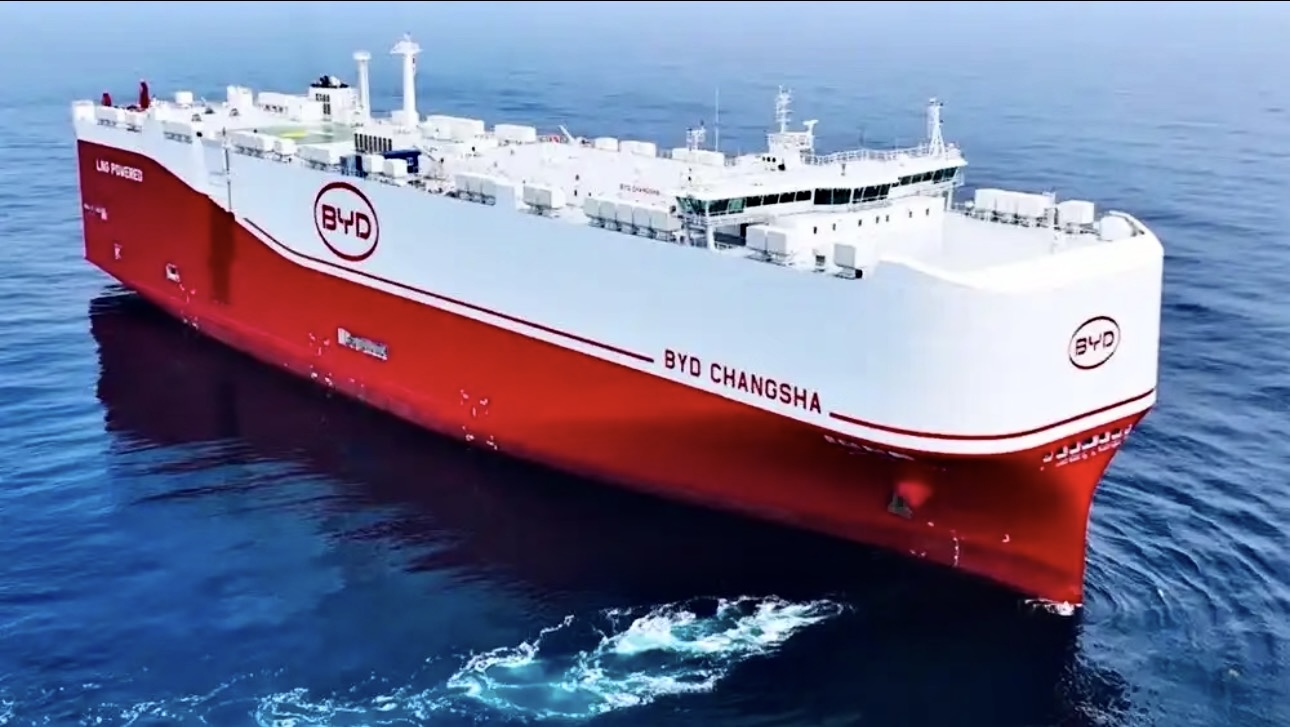
 Katy
Katy
