

 English
-
 繁體中文
繁體中文 -
中文
-
English


Beyond 7.098 Million Units: Where Does China‘s Auto Export Go Next?
Author:Shanghai Sieton Group Co.,Ltd.,
Click:
Time:2026-07-15 18:33:45
A Figure That Deserves a Closer Look
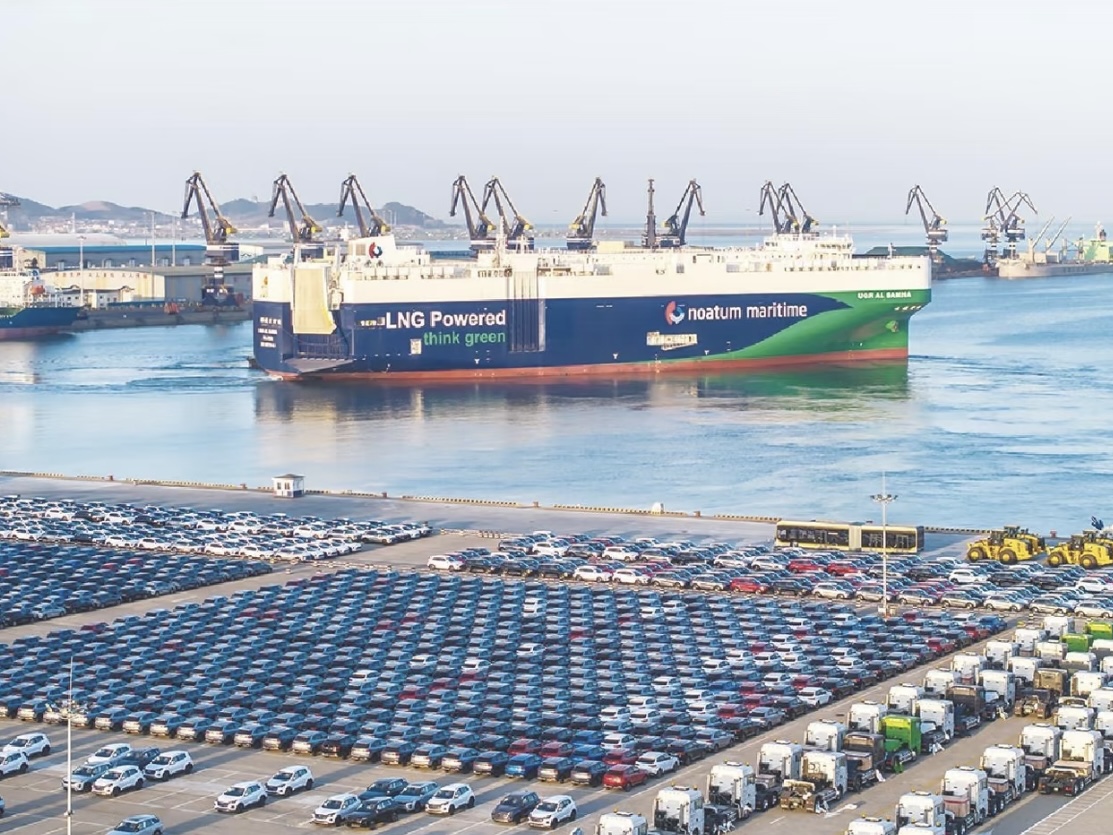
In 2025, China’s auto exports reached 7.098 million units, marking a 21.1% year-on-year increase and securing the top global ranking for the third consecutive year. Yet the driving force behind this impressive number is not solely new energy passenger vehicles.
Within the total volume, internal combustion engine vehicles and used cars have been steadily shipped through B2B trade channels to markets including Russia, Africa, the Middle East, and Southeast Asia. This growth is propelled not only by major OEMs but also by a large number of domestic dealers and trading firms with deep overseas reach. In other words, the narrative of China‘s auto export is no longer about individual brands alone—it is a global network woven by diverse players and multiple pathways.
Russia: A High-Stability, High-Repeat Market Worth Cultivating
Over the past three years, Russia has emerged as the most significant growth market for China’s auto exports.
The rationale is clear: after Western brands withdrew, a supply gap opened up in the local market, and Chinese automobiles swiftly filled the void. New vehicles aside, used cars have also become a vital part of the supply mix. Given Russia‘s geographic and climatic conditions, SUVs and four-wheel-drive models remain the core demand. The local procurement system is characterized by large order volumes, high frequency, and strong repurchase rates.
Three key data points stand out:
- The total import value of used cars in Russia exceeded USD 9.6 billion in 2025.
- Active buyers place over 800 purchase orders per year on average.
- Bilateral trade between China and Russia reached USD 227.9 billion, surpassing the USD 200 billion mark for three consecutive years, with payment settlement, logistics, and customs clearance systems growing increasingly mature.
For Chinese auto traders aiming to build long-term partnerships, Russia offers the conditions to serve as a strategic foothold.
Africa: A High-Demand, Highly Fragmented Growth Market
In contrast to Russia‘s concentration and depth, the African market presents a different landscape—broad coverage, high fragmentation, yet a solid demand base.
The region’s automotive industry is underdeveloped, with roughly 95% of vehicles reliant on imports, among which used cars overwhelmingly dominate. In major countries such as Nigeria, Ghana, and Côte d'Ivoire, used vehicles are the primary choice for ordinary households.
Key characteristics of this market include:
- Broad yet fragmented demand: Rather than being controlled by a few large buyers, the market consists of numerous small and medium-sized dealers, with individual orders typically ranging from 5 to 30 units, though the order rhythm remains steady and consistent.
- Significant end-user price premiums: While buyers are price-sensitive at the procurement end, the multi-tier distribution system often results in retail prices two to three times higher than purchase costs. Exporters with access to upstream vehicle sources and efficient supply chains can achieve profit margins well above those in the domestic market.
- Growing interest in new energy vehicles: Countries like Rwanda have introduced incentive policies for NEVs, and Chinese models—including the BYD Song PLUS, Geely Xingyuan, Wuling Xingguang EV, and Ruilan Maple 80V—are gradually gaining traction in local markets.
The current state of the African market closely resembles Southeast Asia a decade ago—rich in opportunities, with rules still taking shape, but the window will not remain open indefinitely.
A Shift in Overseas Buying Logic: From Relationship-Driven to Efficiency-Driven
In conversations with practitioners based in Russia and Africa, a clear trend is emerging:
Overseas buyers are moving from “relying on personal connections” to “seeking platform-based services.”
In the past, sourcing Chinese vehicles often depended on referrals, trade fairs, or on-site factory visits—processes that were lengthy, costly, and fraught with uncertainty. Today, a growing number of buyers prefer to search for vehicle information online, directly contact suppliers, and complete transactions through digital platforms. Their priorities center on three aspects:
- Vehicle authenticity — access to verifiable, real-vehicle information rather than static inventory spreadsheets;
- Delivery reliability — clear fulfillment capabilities, not vague timelines or ambiguous promises;
- After-sales accessibility — local support teams available to address issues promptly, rather than relying on remote correspondence.
Taken together, these expectations point to one core concept: certainty.
In the next decade, companies that can consistently deliver certainty will be better positioned to earn the long-term trust of overseas buyers and secure a stronger foothold in the evolving global automotive trade landscape.
 Katy
Katy
