

 English
-
 繁體中文
繁體中文 -
中文
-
English


China’s March Export Breakthrough: From "Acceleration" to "Shifting Gears" in Global Expansion
Author:Shanghai Sieton Group Co.,Ltd.,
Click:
Time:2026-04-08 13:49:19
In March 2026, China’s automotive exports achieved a historic milestone. Leading automakers including Chery, BYD, Geely, and Changan reported record-breaking monthly sales, signaling a fundamental shift: overseas markets have evolved from secondary growth points into the industry’s 'primary engine.' This performance does more than just break records; it signals that Chinese automotive globalization has entered a sophisticated new era.
Leading Automakers Surge: Exports as the Core Growth Pole
Following a brief 'winter' in early 2026—where domestic sales saw a sharp decline in January and February—the market rebounded rapidly in March, with exports serving as the decisive recovery driver.
Chery: Continued its streak of exceeding 100,000 monthly exports for 11 consecutive months. In March, Chery exported 148,777 units (up 72% YoY), with Q1 European NEV sales skyrocketing by 250%.
BYD: Q1 overseas sales reached nearly 320,000 units, accounting for 46% of its total volume. Crucially, BYD has joined the International Automotive Task Force (IATF), participating in the formulation of global industry standards.
SAIC: Maintained its 11-year lead among Chinese brands in Europe with 325,000 units in Q1; its MG brand alone surpassed 90,000 units in the region.
Geely: Exported 203,000 units in Q1, a massive 126% year-over-year increase, with Lynk & Co and Zeekr gaining significant traction in the premium segment.
Changan & GAC: Changan’s monthly exports topped 100,000 for the first time in March, while GAC saw an 86% Q1 growth.
Global Footprint: A Three-Pronged Strategy
China’s global expansion is currently advancing along three distinct strategic lines:
1.Russia: Remains the largest single overseas market, where Chinese firms have successfully filled the vacuum left by departing Western brands.
2.Europe (The Strategic Highland): Following a 99% growth in 2025 (811,000 units), the 'Price Undertaking' mechanism implemented in Q1 2026 has effectively ended the era of low-cost competition. Success now hinges on brand premium and technological prowess.
3.Emerging Markets: Southeast Asia has become a laboratory for localized transformation, while Central/South America and Africa represent the fastest-growing incremental markets.
Challenges and Transformation: From 'Entering' to 'Embedding'
Despite the soaring numbers, the industry faces intensifying tariff and technical barriers. The EU’s Carbon Border Adjustment Mechanism (CBAM) and 'Battery Passports' are imposing higher demands on production costs and supply chain transparency. The model of pure vehicle exportation is hitting a ceiling; localized production has moved from an 'option' to a 'necessity.'
The establishment of BYD’s factory in Hungary, Leapmotor’s production in Spain, and Chery’s industrial clusters in Brazil and Mexico mark a pivotal transition to a 'Vehicle + Technology + Localization' symbiotic model. While this shift requires heavy capital and long cycles, it is the only path to becoming a 'rule-maker' rather than a mere 'supplier.'
Conclusion
The China Association of Automobile Manufacturers (CAAM) predicts that by 2030, overseas sales of Chinese brands will approach 10 million units. The key to reaching this target lies not in sheer volume, but in the ability to build a complete ecosystem—from R&D and production to sales and service—on foreign soil. 2026 stands as the definitive watershed moment in this global marathon.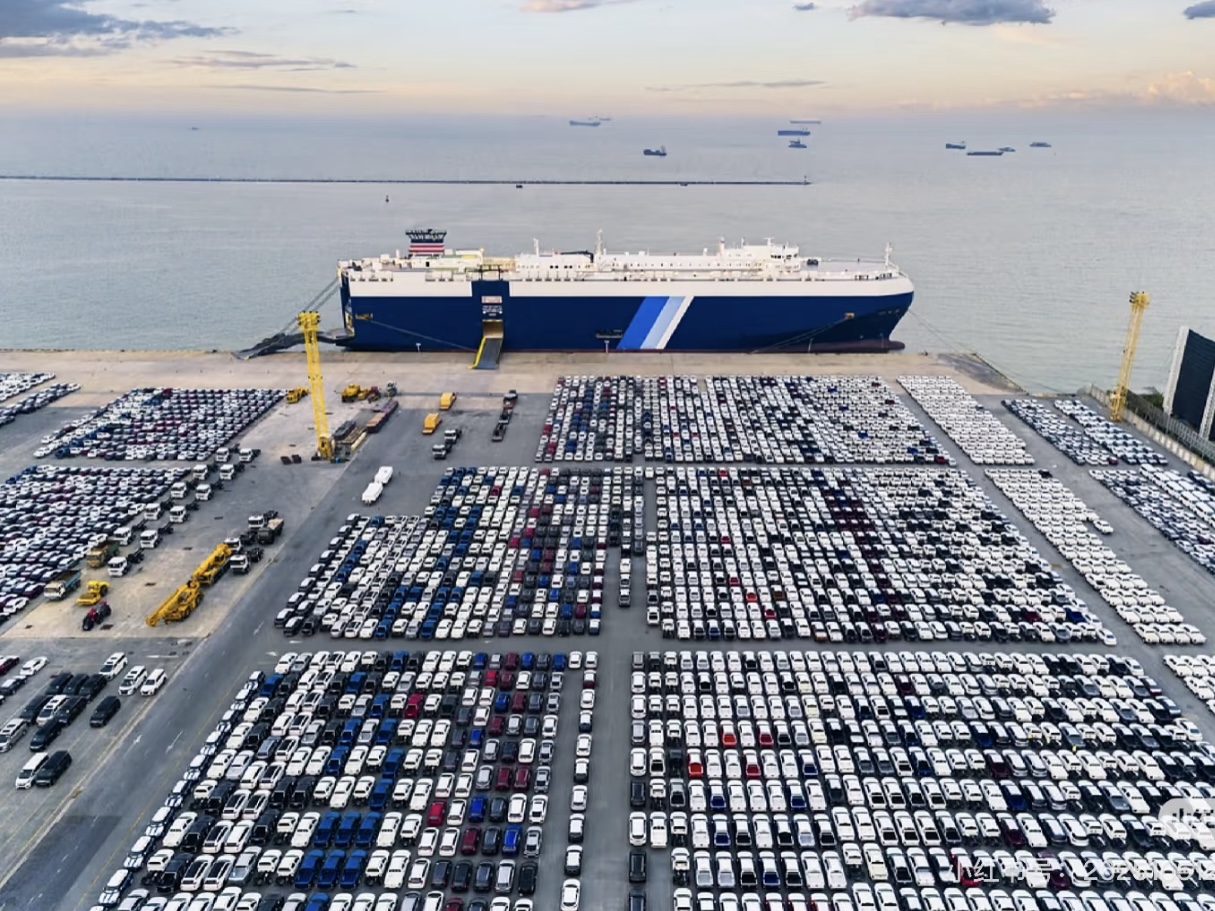
 Katy
Katy
