

 English
-
 繁體中文
繁體中文 -
中文
-
English


Automobile exports hit a new high level, and Chinese automakers accelerated local production in overseas markets
Author:Shanghai Sieton Group Co.,Ltd.,
Click:
Time:2024-11-18 09:56:49
China's automobile exports still ushered in a new breakthrough.
According to the data of the China Automobile Association, in September, the total domestic automobile exports reached 539,000 units, a year-on-year increase of 21.4%. In the first nine months of this year, the total domestic automobile exports reached 4.312 million units, a year-on-year increase of 27.3%.
Among them, 3.384 million traditional fuel vehicles were exported from January to September, a year-on-year increase of 32%. In the environment where the domestic fuel vehicle market is constantly squeezed, exports have become a new incremental path for car companies.
Cui Dongshu, secretary-general of the Passenger Car Association, analyzed that the main driving force this year is still the improvement of the competitiveness of Chinese products, the slight growth of the European and American markets, and the comprehensive replacement of international brands in the Russian market by Chinese cars, especially the increase in exports brought about by the improvement of China's fuel vehicle export competitiveness.
At the same time, although this year was disturbed by the EU's policy on exporting new energy, China's new energy vehicles still exported 928,000 units from January to September, a year-on-year increase of 12.5%.
The China Passenger Car Association branch said that as China's new energy vehicle scale advantages become apparent and the market expands demand, more and more Chinese-made new energy brand products are going abroad and their recognition overseas continues to increase. Although there have been some interferences recently, the export of domestic plug-in hybrid vehicles to developing countries has grown rapidly and the prospects are bright.
Strong growth
In 2023, Russia became the largest export destination for Chinese cars, with China exporting more than 900,000 vehicles to Russia, a year-on-year increase of 459%. This year, Russia's demand has risen again, and it is still the largest export destination for Chinese cars.
Data show that from January to September, China exported 849,951 vehicles to Russia, a year-on-year increase of 33%, far ahead of other regions. In addition to Russia, the top 10 countries in terms of total vehicle exports from January to September 2024 include Mexico with 353,416 vehicles, the UAE with 230,819 vehicles, Belgium with 217,547 vehicles, Brazil with 205,416 vehicles, Saudi Arabia with 185,089 vehicles, the UK with 150,737 vehicles, Australia with 133,171 vehicles, the Philippines with 122,706 vehicles, and Turkey with 102,395 vehicles.
Among them, Russia, Brazil, the UAE, Mexico and Belgium have strong growth momentum, and Russia and Brazil have become the core areas for China's automobile export growth. At the same time, China's automobile exports to the EU have declined, and exports from the United States and Australia have also shrunk.
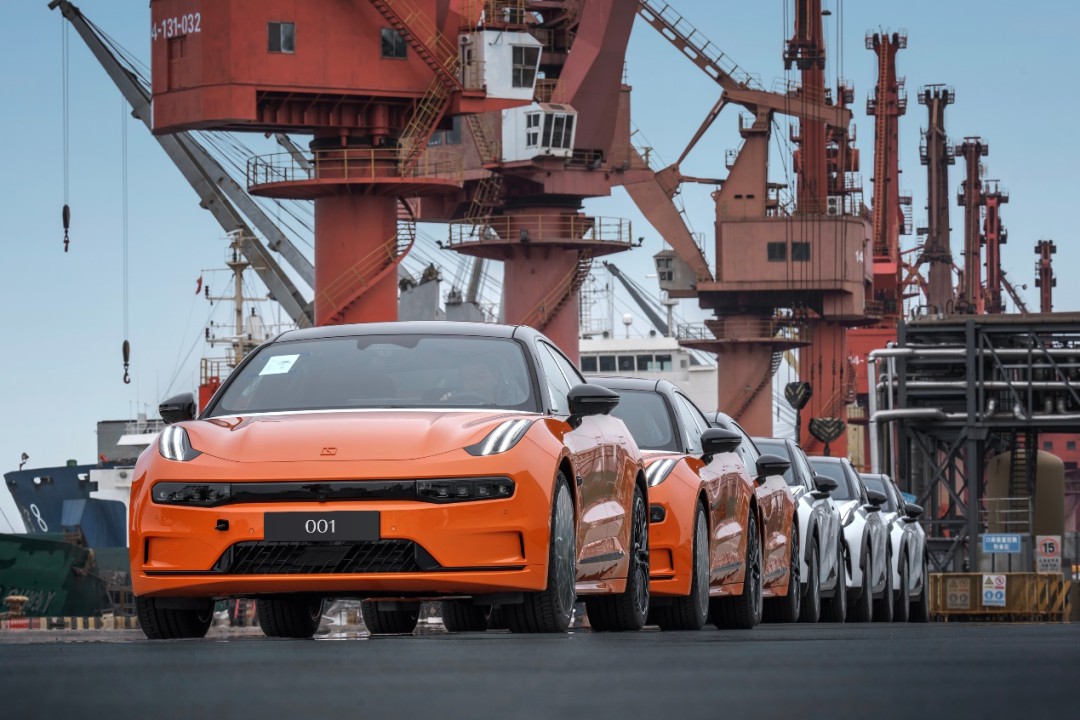
In terms of specific power, Russia's fuel vehicle market has made a huge contribution this year. In addition, Mexico and the UAE markets have exported a lot of fuel vehicles with obvious characteristics. At the same time, Mexico and Brazil are also relatively prominent in the export growth of plug-in hybrid models. Belgium, Thailand and the United Kingdom have strong performance in pure electric exports.
In 2022, China's new energy vehicle exports to the EU accounted for a peak of 46%. Recently, the export share of pure electric models in Europe and Central and South America has declined, and the demand for plug-in hybrid models has also decreased sharply.
"From the perspective of the change in the proportion, China's exports to the European market accounted for 39% in 2023, and fell to 32% from January to September this year." Zhao Yang, vice president of the Automotive Industry Branch of the China Council for the Promotion of International Trade, said at the 2024 Global New Energy Vehicle Cooperation and Development (Shanghai) Forum, "China's exports to the North American market increased, and the growth in the South American market and the Middle East market covered the decline in the EU market. The main contribution to the increase in the North American market came from Mexico, which increased more than five times compared with 2023, and its exports to the United States fell by 50%, and to Canada by 20%. The above decline in the EU was covered by the growth of emerging markets, and it is expected that exports will still maintain a growth of about 20% this year."
From the development curve of China's automobile exports, the annual export volume from 2017 to 2020 remained at around 1 million units, and began to grow rapidly in 2021. In 2021, 2.19 million vehicles were exported, 3.4 million vehicles were exported in 2022, and 5.22 million vehicles were exported in 2023, becoming the world's largest automobile exporter. In 2024, China's automobile exports continued to maintain strong growth. As of September, the export volume has reached 4.69 million vehicles, ranking first among the largest automobile exporters.
Zhao Yang believes that China has made significant progress in the field of new energy vehicles. On the one hand, the scale of China's new energy vehicle industry has grown rapidly, and China's new energy vehicle industry has become a key force in promoting the rapid development of my country's automobile industry; on the other hand, my country's new energy vehicle industry is highly competitive, forming a complete industrial chain from upstream mineral raw material processing, power batteries to downstream complete vehicles, and it occupies a dominant position in each link of the industrial chain.
Chery takes the lead
According to data from the China Association of Automobile Manufacturers, among the top ten enterprises in vehicle export, Chery exported 109,000 vehicles, a year-on-year increase of 20.7%, accounting for 20.2% of the total export volume, ranking first. From January to September, Chery's export sales reached 829,000 vehicles, a year-on-year increase of 27.9%, also ranking first.
As one of the earliest domestic automakers to explore overseas markets, exports have become an important part of Chery's sales. In September, Chery sold 245,000 vehicles, of which export sales were as high as 100,000 vehicles, accounting for 40% of Chery's total sales. It is worth noting that Russia, Brazil and the Middle East, which currently have the largest increase in China's automobile exports, are the main markets for Chery's layout.
Unlike Chery's growth, SAIC Group, which mainly exports to the European market, has a somewhat weak sales this year. From January to September, SAIC Group exported 664,000 vehicles, a year-on-year decrease of 12.7%.
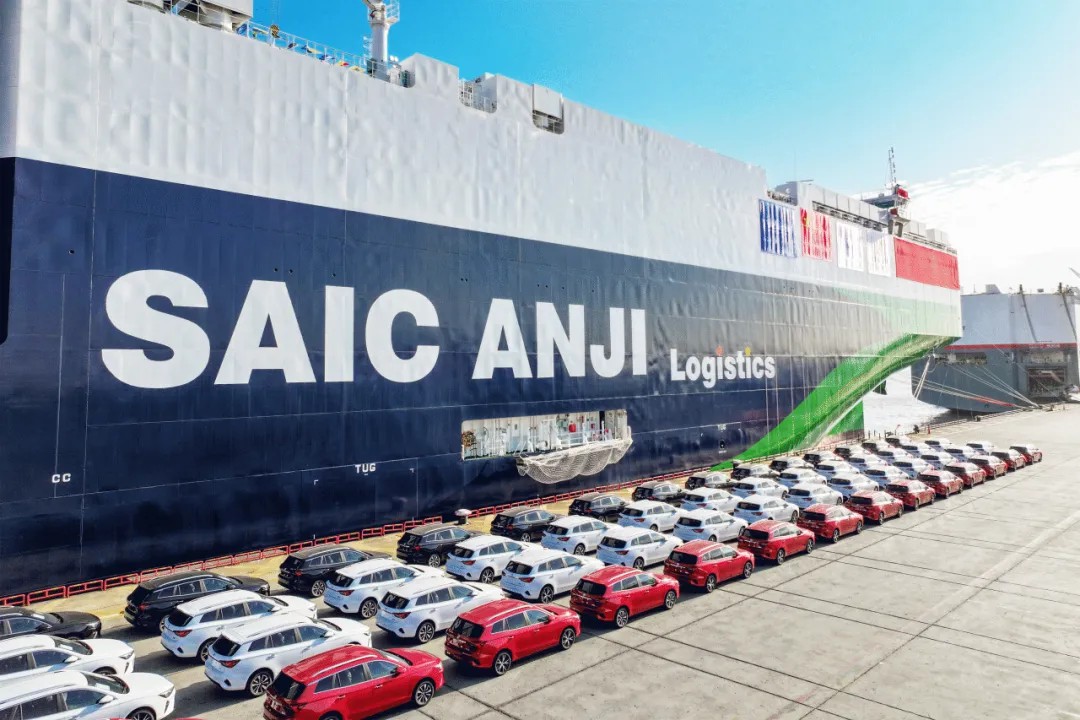
Due to the EU anti-subsidy investigation and the slowdown in demand for electric vehicles in Europe, SAIC Group has been greatly affected, and it may continue for a long time.
The third largest exporter is Geely Group, which exported 39,183 vehicles in September, a year-on-year increase of 51%; this year, a total of 314,038 vehicles have been exported, a year-on-year increase of 68%.
In addition, the export volume of many automakers has ushered in a big explosion this year. Among them, BYD's cumulative exports in the first three quarters reached 302,000 vehicles, a year-on-year increase of 96.3%. GAC Group exported a total of 95,000 vehicles in the first three quarters, a year-on-year increase of 112.0%.
Recently, Li Yunfei, general manager of BYD Group's brand and public relations department, said at the "Leader's Journey" 2024 China Enterprise High-quality Overseas Forum that in terms of automobile exports, SAIC and Chery have done very well. They belong to the first echelon of Chinese auto companies going overseas. BYD should currently be the best in the second echelon and should learn from SAIC and Chery.
Deepening overseas expansion
From the current situation, while expanding the export of complete vehicles, Chinese automakers are also accelerating the promotion of localized production in overseas markets.
"Today, Chery has a total of 15 million car users, of which more than 4.2 million are overseas users." Yin Tongyue, Secretary of the Party Committee and Chairman of Chery Holding Group, said that Chery has been going abroad for more than 20 years and has learned a lot of lessons. The deepest feeling is: once entering a market, it is necessary to change from "you" to "us", abide by local laws and regulations, respect local customs and habits, and take root and become a local corporate citizen.
Wei Jianjun, Chairman of Great Wall Motors, also believes that "Chinese automakers have not achieved localized production in many regions when going overseas, and tariffs are high, so their competitiveness and profitability are poor. In addition, other countries will not let you sell Chinese cars indefinitely in their local areas." In Wei Jianjun's view, facing globalization is not something that can be solved by electrification. The market demand in each region is different, and globalization is to produce products that meet local needs.
Chinese automakers such as BYD, Chery, Changan, Great Wall, GAC and SAIC have announced 10 overseas factory construction or expansion projects in countries such as Thailand, Indonesia and Brazil. At the same time, brands such as BYD and Volvo are also actively promoting their expansion plans in Europe. BYD is building a factory in Hungary and plans to build a new factory in Turkey to enter the EU market. Xiaopeng Motors and Geely's high-end electric car brand Zeekr also said that they are considering localizing production.
Yin Tongyue said that it is necessary to enter the overseas market in a "rooted" way and become a "contributor" that benefits the world. A truly globalized enterprise is not only engaged in global trade and layout of the global market, but more importantly, it has a global business philosophy, global responsibility and value contribution.
Shanghai Securities Research Report pointed out that according to the Global Auto Trade Network, Chinese automakers have built and put into production full-process manufacturing plants in 9 countries, with an annual output of 1.2 million vehicles by 2023. Shanghai Securities believes that automakers with fast localized production in Europe are expected to reduce the impact of tariffs. In the past, Chinese automakers mainly expanded overseas markets in the form of exports and overseas assembly of parts, but due to tariff measures implemented by some countries or regions, investment in full-process manufacturing has gradually emerged.
"It is the destiny of our generation of automotive people to have Chinese cars go abroad," said Wei Jianjun.
 Katy
Katy
